No Rest for the Wicked
No Rest for the Wicked is an action strategy game where the player takes control of a ghost defending his abode from a team of ghost hunters. Being a ghost, the player cannot physically interact with the enemies, but instead uses spiritual powers to interact with the environment to dispatch of them.
Project Details / Background
The initial idea for the game came from my previous work on developing an enemy possession system for Sovereign. I thought about what other types of games could I include such a feature, which I eventually landed on the idea of the player playing as a ghost. The rest of the game was brainstormed by the rest of my development team: Mason Miller, Vijay Messan, Tim Kim, and Alia Kunow. The project was initially created for one of our portolfio classes in university, and so the scope of development was only supposed to be one month to make a simple demo. Luckily we all agreed to continue development into our capstone classes, which will allow for futher development for a full fledged game.
I was mainly in charge of core design, player functionality, and system integration. Having come up with the initial concept, I was put in charge of design. With the limited scope of our development a lot of things had to be cut for the sake of time or redesigned to be less complex, which came down to my judgment. The way we had divided up responsibilities was feature based, I was in charge of the player character, Vjijay was responsible for the AI, Tim the UI and save systems, and Mason developed the interactible objects and designed the maps. When it came to features that would interact with other systems that someone else had developed, it was my job to make sure that it was integrated and functioned properly.
I really liked the direction our game went, and it might be a little biased to say that the concept is unique. The idea of taking away the player's ability to directly interact and kill the enemies, and forcing them to instead make use of their environment, seperates it from a lot of other first-person shooter/puzzle games. The concept that the player is essentially the horror movie monster instead of the victim allowed for a lot of fun design freedom, taking a lot of inspiration for a lot of other horror games and movies.
Image Gallery
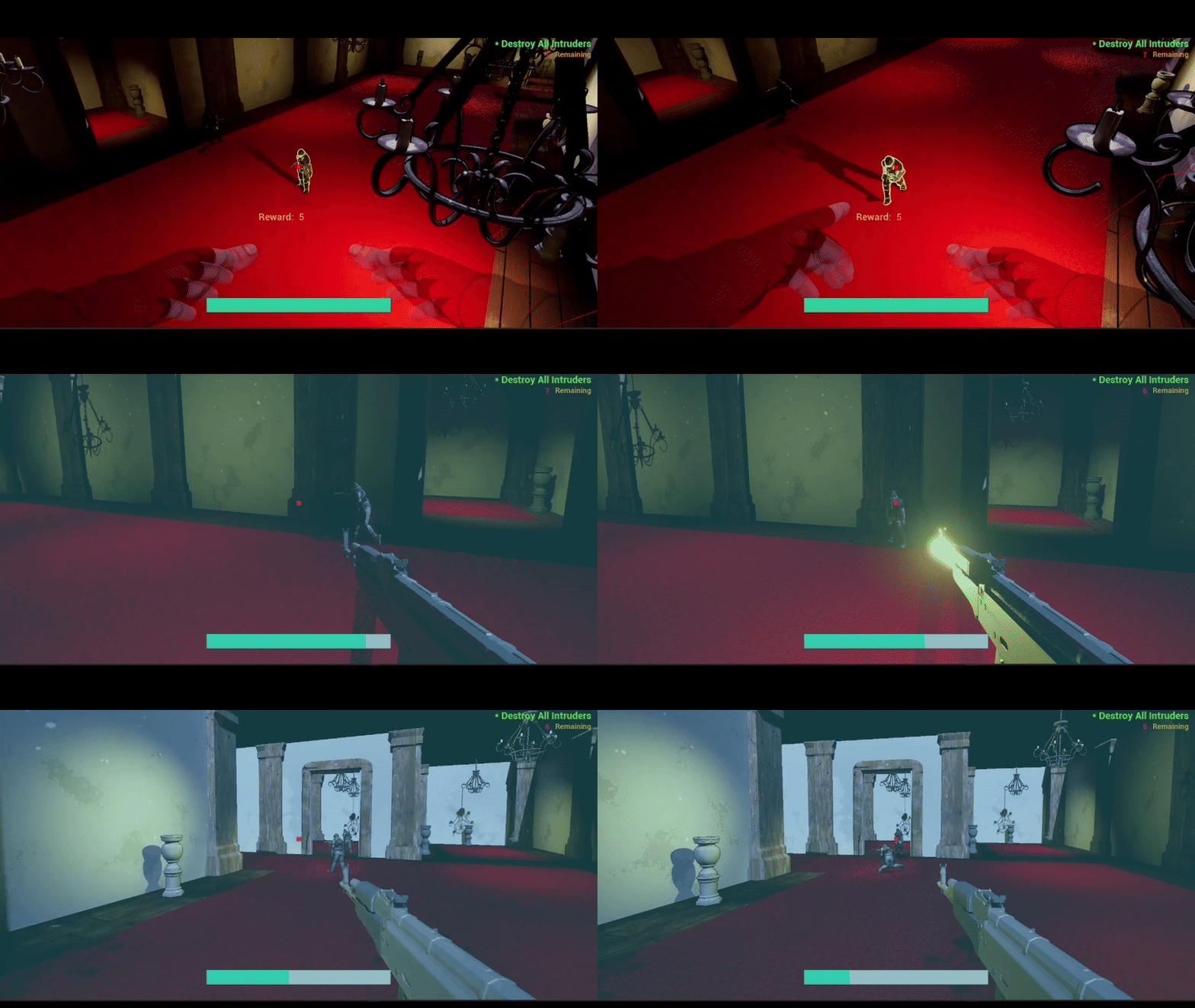 Player is able to temporarily possess enemies and use their weapons against other enemies.
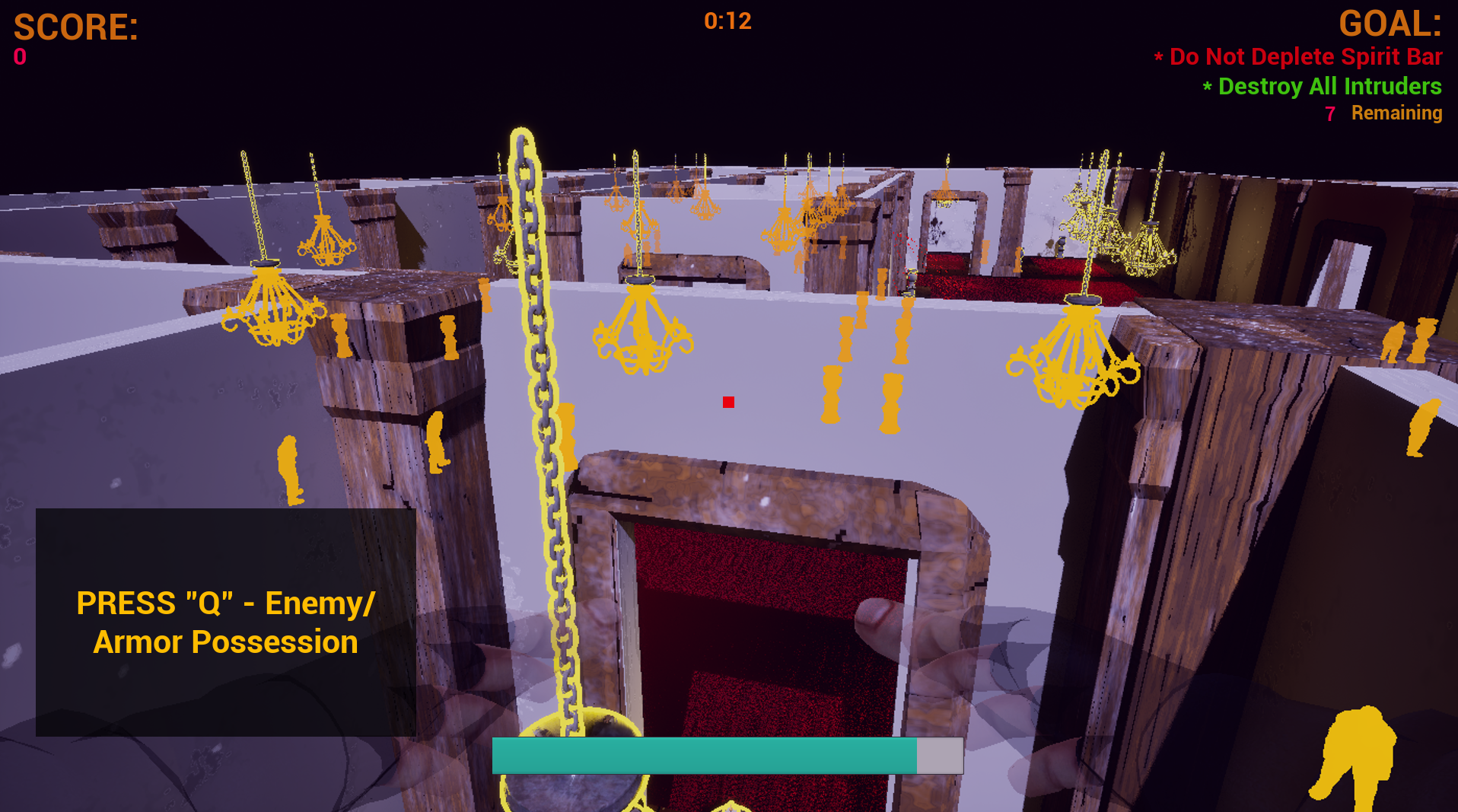 Scan feature to identify interactible objects and enemy positions.